Yes, you can usually sell a house with open code violations in Lake County, Indiana. The violations don’t disappear at closing: you disclose them, and the buyer takes on the work. If the city has issued you an order under Indiana’s Unsafe Building Law and the work isn’t done, state law adds two duties. You must give the buyer full information about the order before the sale, and you must notify the city in writing within five days after you transfer or agree to transfer the property.
That’s the short answer to selling a house with code violations in Lake County. Below is the longer one: what violations look like, how enforcement works in Gary and Hammond, how fines turn into liens, and your three main options. This is general information, not legal advice. For your property, contact the city and talk with an Indiana real estate attorney.
What code violations look like
“Code violation” covers a lot of ground, from tall grass to a demolition order. Most fall into these groups.
| Type | Common examples | Who usually handles it in Gary |
|---|---|---|
| Exterior and nuisance | Grass or weeds over eight inches, trash and debris, junk cars, parking on the lawn, broken fences | Code Enforcement Department, (219) 806-6487 |
| Permits | Work done without a permit, or permits opened and never closed out with final inspections | Building Department, (219) 881-1377 |
| Unsafe building orders | Orders to vacate, seal (board up), clean out, repair or demolish | The city’s enforcement authority under state law |
| Vacant or boarded houses | A house sealed against entry, with requirements to maintain it | Same as above |
| Rental registration | A rental that isn’t registered, or wasn’t re-registered after a sale | Building Department |
Gary’s code enforcement office lists its most common citations as unkept lawns, dumping, high weeds and tree branches, abandoned vehicles, parking on lawns, open burning, blocked sidewalks, stored debris, signs and fences. City code requires owners to keep grass and weeds at eight inches or less.
In Hammond, the Code Enforcement Division of the Inspections Department handles housing, rental registration, nuisances, weeds, trash, litter and general maintenance. You can reach it at (219) 853-6447. Other Lake County cities and towns have their own building or code offices, so start with the town hall where the house sits.
How enforcement usually works
City citations
For everyday violations, cities usually start with a notice. In Hammond, inspectors send the owner a notice to repair. If the work isn’t done, the code enforcement commissioner may start legal proceedings, and citations are used as a last resort.
Gary’s code enforcement office describes its court process this way: a citation is mailed with a court date, the owner appears before a judge, and owners are usually given about 30 days to fix the problem before coming back. A fine is assessed, and the whole process can take 60 days or more (City of Gary Code Enforcement).
Indiana’s Unsafe Building Law
Bigger problems often fall under Indiana’s Unsafe Building Law, IC 36-7-9. It applies in cities and counties that adopt it by ordinance. Here’s how it works:
- What counts as unsafe. A building can be unsafe if it’s structurally impaired, a fire hazard, a public health hazard, a public nuisance, dangerous because of a code violation, or vacant or blighted and not kept fit to live in (IC 36-7-9-4).
- The order. The city can order you to vacate, seal, exterminate, clean out, repair or demolish. The order has to name the action, give at least 10 and no more than 60 days to do it, and explain your transfer duties (IC 36-7-9-5).
- The hearing. Some orders automatically get a hearing. Orders to seal, exterminate, clean out or repair become final 10 days after notice unless you ask for a hearing in time. You can appear with or without a lawyer, present evidence and question witnesses. The hearing authority can affirm, change or cancel the order (IC 36-7-9-7).
- Penalties. If the hearing authority finds you willfully didn’t comply, it can impose a civil penalty of up to $5,000. It can also postpone the penalty and later reduce or drop it once the work is done.
When the order follows the house
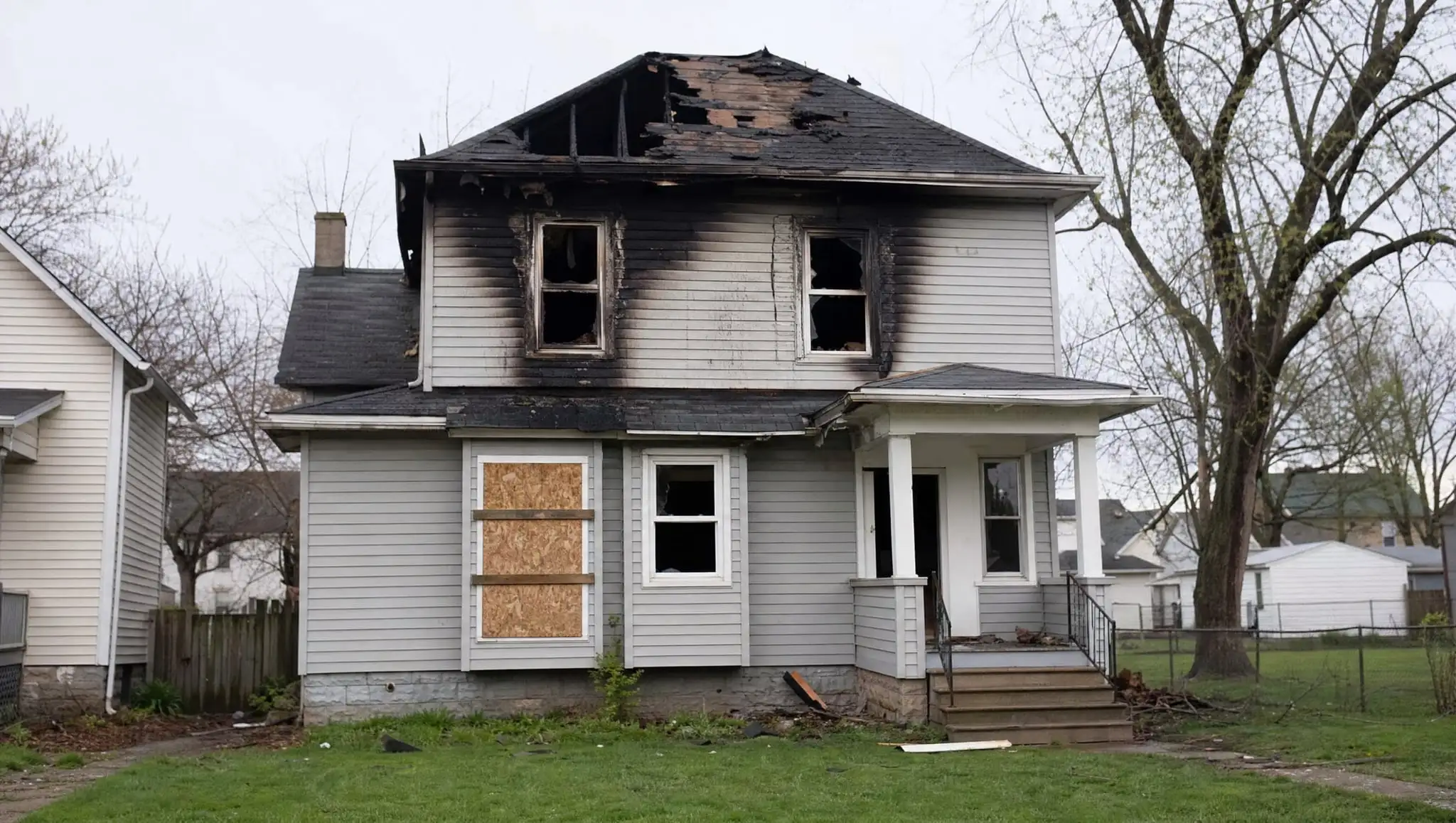
Orders to demolish and certain other actions are recorded with the county recorder. Anyone who takes an interest in the property after that takes it subject to the recorded order (IC 36-7-9-26).
And if you received an order and haven’t complied, you have to (IC 36-7-9-27):
- Give full information about the order to the buyer before you transfer or agree to transfer the property.
- Within five days after you transfer or agree to transfer, give the city the buyer’s full name, address and phone number, plus a copy of the deed or purchase agreement.
Skipping these steps is a Class C infraction, and each day counts as a separate offense (IC 36-7-9-28).
How fines and costs become liens
Unpaid code problems can follow you, the house, or both.
- City work on unsafe buildings. If the city does the work and isn’t paid, it can certify the cost to the county auditor. The auditor adds it to the property tax bill as a special assessment, collected like delinquent taxes (IC 36-7-9-13.5). The city can instead get a court judgment that becomes a lien on the owners’ property (IC 36-7-9-13).
- Weed cutting. If a city mows and the bill goes unpaid, the cost can also be certified to the auditor and collected with your taxes (IC 36-7-10.1-4).
- Court fines. Fines from a citation case are owed by the person cited.
Charges added to the tax bill matter because unpaid taxes can lead to a tax sale. If a house is also found vacant or abandoned, Indiana has a faster track with no right to redeem after the sale. Our guide to the Lake County tax sale explains both.
Selling with open violations, step by step
- Collect every notice. Gather letters, orders, citations and court dates. Ask the city for a list of open violations and permits on the address. Check Indiana’s myCase for any court case.
- Don’t skip a hearing or court date. Even if you plan to sell, show up or have an attorney there. Ask for more time if you need it.
- Disclose in writing. Indiana’s seller disclosure form asks about known problems with the foundation, roof, structure, mechanical systems and more (IC 32-21-5-7). Some sales are exempt, such as transfers during estate administration, but the unsafe building notice duty above is separate.
- Send the five-day notice to the city if there’s an unsafe building order.
- Spell out who handles what in the purchase agreement, including fines, liens and who works with the city after closing.
- Let the title company pay recorded liens and tax-bill charges from your proceeds at closing.
Your three options
| Option | When it fits | Things to watch |
|---|---|---|
| Fix it first | Small, clear violations; you have cash and time | Permits and inspections are often required. In Gary, inspections and re-inspections carry fees, and contractors must be licensed with the city. |
| Negotiate time | You want to fix it but need longer | Ask before deadlines pass. The hearing authority can continue a hearing, and a postponed penalty can be reduced if the work gets done. |
| Sell as-is | Big repairs, demolition orders, or you can’t manage the work | The price reflects the work. Fewer buyers can get a loan on a house with major problems. |
Fixing small things can pay off. A cleared yard and a closed-out permit may widen your pool of buyers. Big structural repairs are a different story, especially if you’d be borrowing to pay for them. Our post on what a Gary house is worth as-is shows how buyers price repairs, and our page on selling a house that needs repairs compares the paths.
If the house is empty, see our page on selling a vacant house. For local details, visit our pages on Gary and Lake County. And if selling as-is sounds right, you can request a written offer. Send copies of any orders so the offer accounts for them.
Whatever you choose, call the city office that issued the notice first. Ask exactly what’s open, what’s owed and what deadline you’re facing. Then talk with an Indiana real estate attorney before you sign anything.
Quick answers
Can the city still come after me for fines once I sell?
It can. Fines or judgments already entered against you generally stay your responsibility, and selling doesn't erase them. Indiana's unsafe building law can also name past owners when the city does the work and isn't paid. Ask the city what's owed and resolve it, ideally at closing, and talk to an attorney about your exposure.
How do I find out whether my house has open violations or permits?
Call the city or town where the house sits. In Gary, that's the Code Enforcement Department for things like weeds and trash and the Building Department for permits and building conditions. Also check for court dates on Indiana's myCase site and for recorded orders at the Lake County Recorder.
Can I sell a house that's under a demolition order?
Often, yes. In Indiana, demolition orders under the unsafe building law are recorded, and a buyer takes the house subject to the order. That means the buyer has to be ready to repair, appeal or demolish on the city's timeline. Expect fewer interested buyers and a lower price, and get legal advice on any hearing dates.