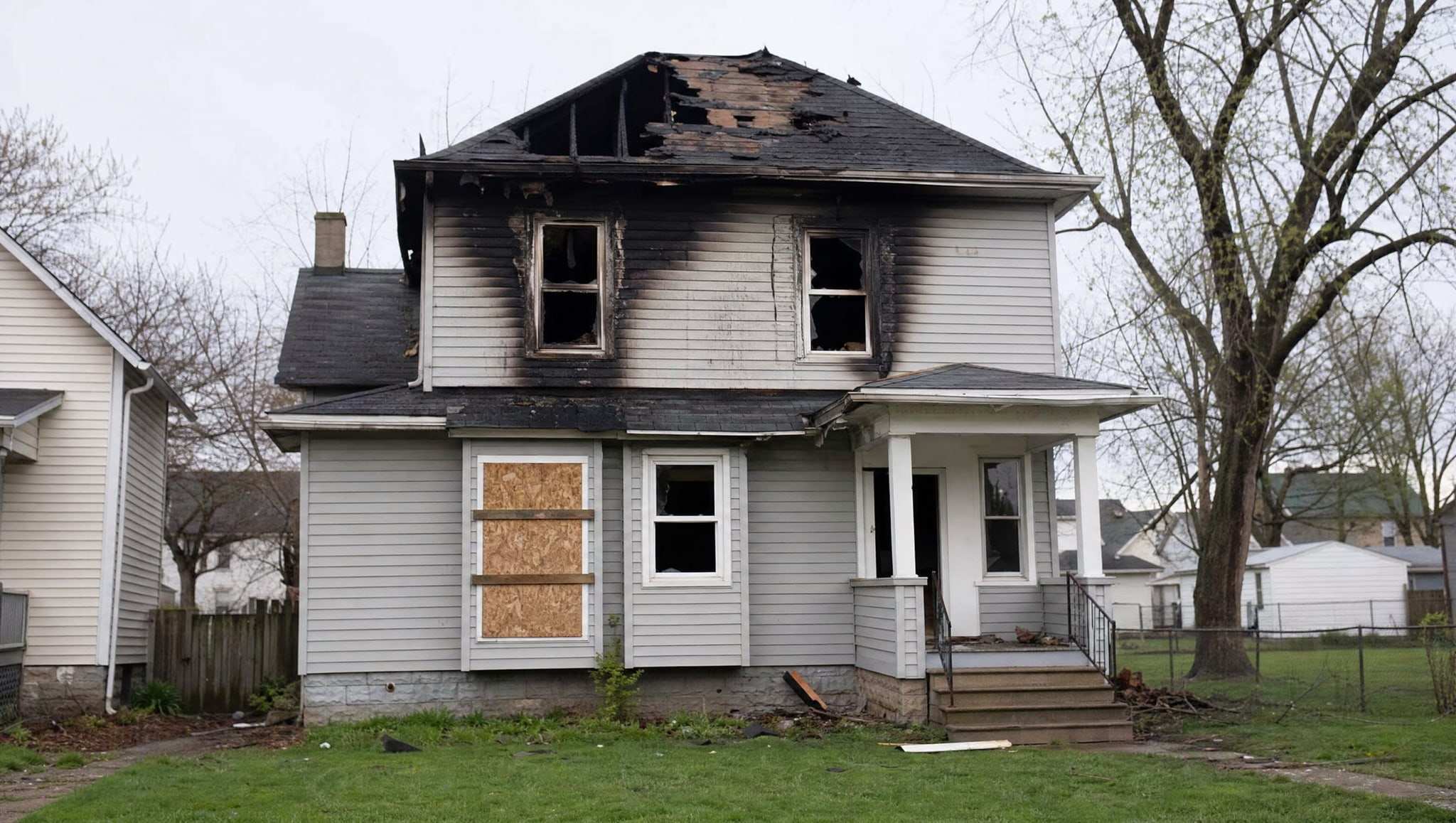
Yes, you can sell a fire-damaged house in Gary, Indiana, either as-is or after repairs, and often while the insurance claim is still open. The order matters, though. Make the house safe and secure, get the insurance claim and your mortgage company sorted out, respond to any city order, and then choose between repairing, listing as-is and selling for cash.
This guide covers how to sell a fire damaged house in Gary, Indiana, step by step.
General information, not legal or insurance advice. Your policy, your mortgage and any city order control what happens next. Talk with your insurer, a licensed public adjuster or an Indiana attorney about your situation.
The first few days after a fire
Stay safe and sort out the utilities
Don’t go back inside until the fire department says it’s safe. Fire and the water used to fight it can weaken floors, roofs and stairs in ways you can’t see.
If the gas and electric were shut off, NIPSCO will need to restore them before anyone can work inside. In Gary, service that’s been off for 90 days or more needs an inspection from the City of Gary Building Department before NIPSCO will reconnect it.
Get the fire report
Ask the fire department that responded for a copy of its incident report. Your insurer will likely want it, and so may a buyer.
Secure the house
An open, burned house draws trespassers, scrappers and the city’s attention. Board up broken windows and doors, and cover holes in the roof. Most policies expect you to take reasonable steps to protect the property from more damage. Ask your insurer before you hire a board-up company, and keep every receipt.
Document everything
Take photos and video of every room before anything gets thrown out, list damaged belongings, and save receipts for hotel stays, meals and anything you pay to protect the house.
Be careful with anyone who shows up at the door
After a fire, contractors and adjusters sometimes arrive within hours. Don’t sign anything on the spot.
In Indiana, a public adjuster needs a certificate of authority from the Department of Insurance, and a contract with one who doesn’t have it is void (IC 27-1-27-11). The contract has to be in writing, and state law gives you short windows, three business days in certain situations, to cancel it in writing (IC 27-1-27-19 and IC 27-1-27-20). You can ask the Indiana Department of Insurance to confirm a license.
For a place to stay or other immediate needs, the American Red Cross may be able to help.
Insurance claim basics
Read your policy, and ask your insurer to explain anything unclear. Good questions to ask early:
- How much dwelling coverage do I have, and does it pay replacement cost or actual cash value?
- Is any part of the payment held back until repairs are finished?
- Does my policy pay additional living expenses while I can’t live there? The Indiana Department of Insurance notes that a homeowners policy may pay reasonable additional living expenses after a covered loss (IDOI).
- Was the house empty before the fire? Many policies limit coverage for vacant houses. Our page on selling a vacant house explains why.
If the claim is large, or you disagree with the insurer’s numbers, a licensed public adjuster or an attorney can help. A public adjuster works for you and is usually paid a share of the settlement, so get the fee in writing before you sign.
Your mortgage company and the insurance check
If you have a mortgage, the check for the house will often be made out to you and your mortgage company together. Many lenders hold that money and release it in stages as repairs get done.
Call your mortgage servicer early. Ask how its insurance claim process works, what paperwork it needs, and what happens to money it’s holding if you sell instead of rebuild. Your payments are still due while the claim is open. If you can’t keep up, call your servicer and a HUD-approved housing counselor right away.
Indiana’s fire claim set-aside law
Indiana lets a city or town opt in to a program that holds back part of a fire insurance payout on the building to cover the cost of repairing or tearing it down (IC 27-2-15). It applies only in places on the Department of Insurance’s list, and other conditions apply.
Where it applies, you can generally avoid the holdback by giving your insurer proof of a repair contract within 15 days after the final settlement. Otherwise the city can receive the smallest of 10% of the available proceeds, its certified cost, or a cap of $7,000 for your own home ($15,000 for other buildings). The money sits in escrow, and anything the city doesn’t claim in time goes back to the insured (IC 27-2-15-6). Ask your insurer whether any of this applies to you.
City of Gary orders after a fire
In Gary, the Building Department at 401 Broadway, (219) 881-1377, handles building conditions and permits. The Code Enforcement Department handles outside problems like debris and overgrown yards.
Indiana’s unsafe building law lists a fire hazard and an unsafe structure among the conditions that make a building unsafe (IC 36-7-9-4). A city that uses the law can order an owner to (IC 36-7-9-5):
- seal (board up) the building against trespassers, to a standard set by local ordinance
- remove trash, debris and fire-hazardous material
- repair the building
- demolish all or part of it
If a building will stay sealed for more than 90 days, the order can also require weatherproofing, outside improvements and ongoing upkeep. In an emergency, the city can act without an order to remove an immediate danger and then go after the owner for the cost (IC 36-7-9-9).
You can sell with an open order, but it follows the house and brings notice duties to the buyer and the city. Our guide to selling a house with code violations in Lake County explains hearings, liens and those duties step by step.
Ask the assessor about your property taxes
A fire can lower what your house is worth for tax purposes, but the change doesn’t happen on its own. Indiana law lets an owner petition the county assessor to reassess property destroyed in whole or in part by a disaster, effective as of the date it happened (IC 6-1.1-4-11).
The state’s Department of Local Government Finance says the destruction of a single home can qualify, and the petition is State Form 137R (DLGF). There’s a deadline tied to when the affected taxes are due, so call the Lake County Assessor soon after the fire.
Three ways to sell a fire-damaged house
| Option | When it fits | What to watch |
|---|---|---|
| Repair, then list | The damage is limited, insurance covers most of the work, and you can manage a rebuild | Permits, licensed contractors, inspections and months of carrying costs |
| List as-is with an agent | The house still has solid bones and you want to test the open market | Most buyers using a loan can’t buy a badly burned house, and you still pay a commission |
| Sell to a cash buyer | Heavy damage, an open city order, or you don’t want to manage a rebuild | The price will be below what a repaired house would bring |
Repair, then list
In Gary, permits are required for alterations and some repairs, and all contractors and subcontractors must be licensed with the city. Homeowners can’t do their own electrical, HVAC, plumbing or certain structural work (City of Gary Building Department). A repaired house with its permits closed out can sell to buyers using a mortgage, usually for more.
List as-is
A badly burned house usually can’t meet a lender’s property standards. FHA loans, for example, require a home that’s safe, sound and secure (HUD Handbook 4000.1). So an as-is listing mostly draws buyers paying cash, though an agent can reach more of them.
Sell a fire-damaged house for cash
A cash buyer takes the house as it sits, burned rooms, smoke smell and all. You don’t clean it out or rebuild, and the closing runs through a title company that pays off the mortgage and any liens. Expect the price to reflect the repairs, and compare more than one offer.
We buy fire-damaged houses in Gary and across Lake County as-is, and you don’t need to finish your claim before getting a written offer from us. Our page on selling a house that needs repairs compares fixing first with selling as-is in more detail.
How the insurance money and the sale fit together
This depends on your policy, your lender and your contract, so settle these questions before you sign:
- Ask your insurer how a sale affects what it will pay, especially any money held back until repairs are made.
- Tell any buyer about the claim, and make the purchase agreement say plainly whether the claim and any future insurance payments stay with you. The price should reflect that.
- Have an Indiana attorney review the contract if a claim is still open.
Telling buyers about the fire
Selling as-is doesn’t mean staying quiet. Indiana’s seller disclosure form asks about the known condition of the foundation, roof, structure and mechanical systems, among other things (IC 32-21-5-7). Fire, smoke and water damage you know about, including damage that was repaired, should be reflected in your answers.
Some transfers are exempt from the form. Keep the fire report, the insurance estimate, repair invoices and permits together so you can answer questions. Our guide to selling a house as-is in Indiana covers the form, the exemptions and the lead paint rules for older homes.
If the burned house is a rental, our tired landlord page covers tenants and deposits. For local offices and other Gary details, see our Gary page.
Quick answers
Do I have to clean up after the fire before I sell?
Not if you sell as-is. You may still need to keep the house secured and the yard clear of debris to satisfy your insurer and the city. Take photos before anything is thrown out, keep receipts for anything you pay for, and ask your insurer what it expects before you hire a cleanup crew.
Can the City of Gary tear down my house after a fire?
It can if the building is found unsafe under Indiana's unsafe building law. Owners get notice and a chance to ask for a hearing before most orders become final. In a true emergency, the law lets the city act first to remove an immediate danger and go after the cost later. Read every notice the day it arrives, don't miss a hearing, and talk with an Indiana attorney.
Do I have to tell buyers about the fire if the house was repaired?
If you know about damage or repairs a buyer would want to know about, disclose them. Indiana's seller disclosure form asks about the known condition of the foundation, roof, structure and mechanical systems. Keep the repair invoices, permits and inspection records so you can show what was done, and ask an attorney if you're unsure how to word it.